

Are you ready to start speaking Spanish like a local and make a great first impression? Whether you’re a beginner learning Spanish, a traveler exploring Spain or Latin America, or a professional connecting with Spanish-speaking colleagues, knowing how to greet someone properly is your first step to confidence and connection. In Spanish, saying “hi” isn’t just a word—it’s a way to show respect, friendliness, and cultural awareness.
In this guide, you’ll discover all the ways to say hi in Spanish, from casual hola to formal greetings like buenos días, regional slang, online expressions, pronunciation tips, and cultural nuances. By the end, you’ll be ready to greet anyone—friend, stranger, or colleague—with authenticity and style. Let’s dive in and make your Spanish greetings unforgettable!
Why Greetings Matter in Spanish Culture

Greetings in Spanish-speaking countries are not just polite—they’re a reflection of the culture, respect, and relationships. Unlike some English-speaking cultures, Spanish greetings are often accompanied by gestures like handshakes, hugs, or cheek kisses, depending on the country and the relationship.
- Respect and hierarchy: Formal greetings like Buenos días, señor/señora show respect, especially in professional or elder interactions.
- Friendliness and warmth: Informal greetings like Hola or ¡Qué onda! convey friendliness and approachability.
- Cultural nuances: In Spain, a casual ¡Buenas! is common among peers, while in Mexico, informal slang like ¡Qué onda! is widespread.
Tip: Observing local customs and matching your greeting with the situation can make you appear more culturally aware and approachable.
Basic Ways to Say Hi in Spanish
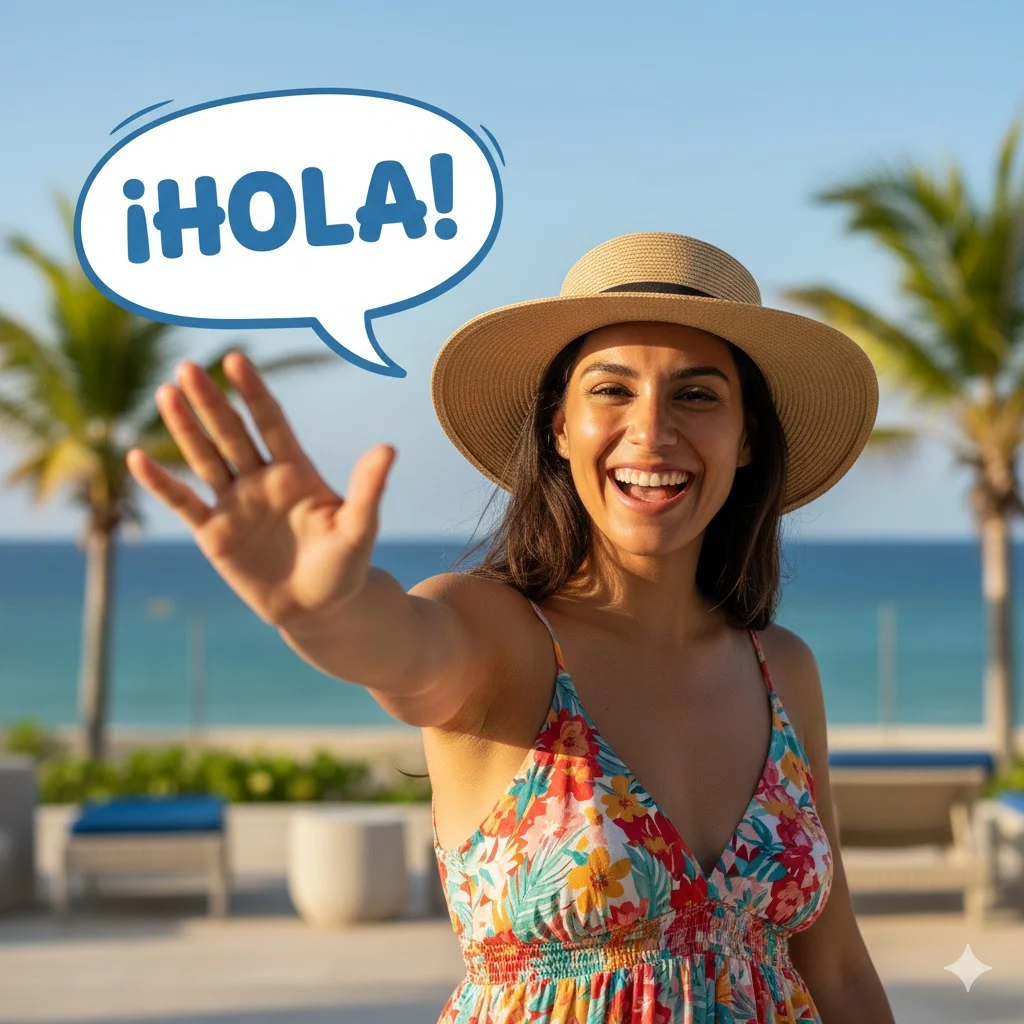
1. Hola – The Universal Greeting
- Meaning: Hi / Hello
- Usage: Works in casual and formal situations; safe for almost all contexts.
- Pronunciation: /ˈo.la/ (stress on the first syllable)
- Example:
- Hola, ¿cómo estás? (Hi, how are you?)
- Hola, mucho gusto. (Hi, nice to meet you.)
Cultural Note: Hola is widely used among children, friends, colleagues, and even strangers in informal encounters.
2. Buenos días – Good Morning
- Meaning: Good morning
- Usage: Used until around noon; formal and polite.
- Pronunciation: /ˈbwe.nos ˈdi.as/
- Example:
- Buenos días, señora López. (Good morning, Mrs. López.)
- Buenos días, profesor. ¿Cómo está usted? (Good morning, professor. How are you?)
Cultural Insight: Using Buenos días in professional settings is expected; skipping it can appear rude in formal environments.

3. Buenas tardes – Good Afternoon
- Meaning: Good afternoon
- Usage: From noon until sunset; formal or informal.
- Pronunciation: /ˈbwe.nas ˈtar.des/
- Example:
- Buenas tardes, amigos. (Good afternoon, friends.)
- Buenas tardes, señor González. (Good afternoon, Mr. González.)
Tip: Unlike English, you should always use the appropriate time-specific greeting rather than a generic “hi.”

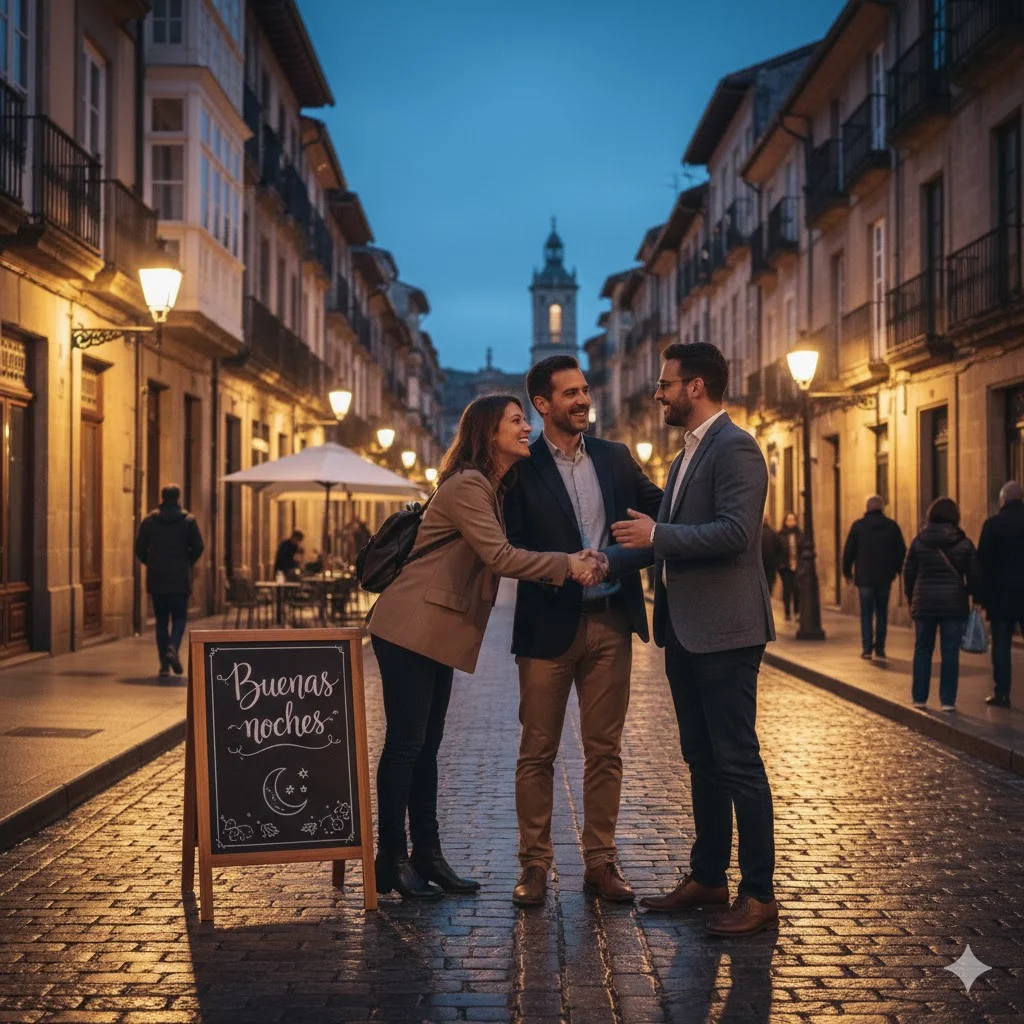
4. Buenas noches – Good Evening / Good Night
- Meaning: Good evening / Good night
- Usage: Evening greetings or farewells; formal and informal.
- Pronunciation: /ˈbwe.nas ˈno.tʃes/
- Example:
- Buenas noches, ¿cómo estuvo tu día? (Good evening, how was your day?)
- Buenas noches, hasta mañana. (Good night, see you tomorrow.)
Fun Fact: In some Latin American countries, Buenas noches is also used when entering social events in the evening.
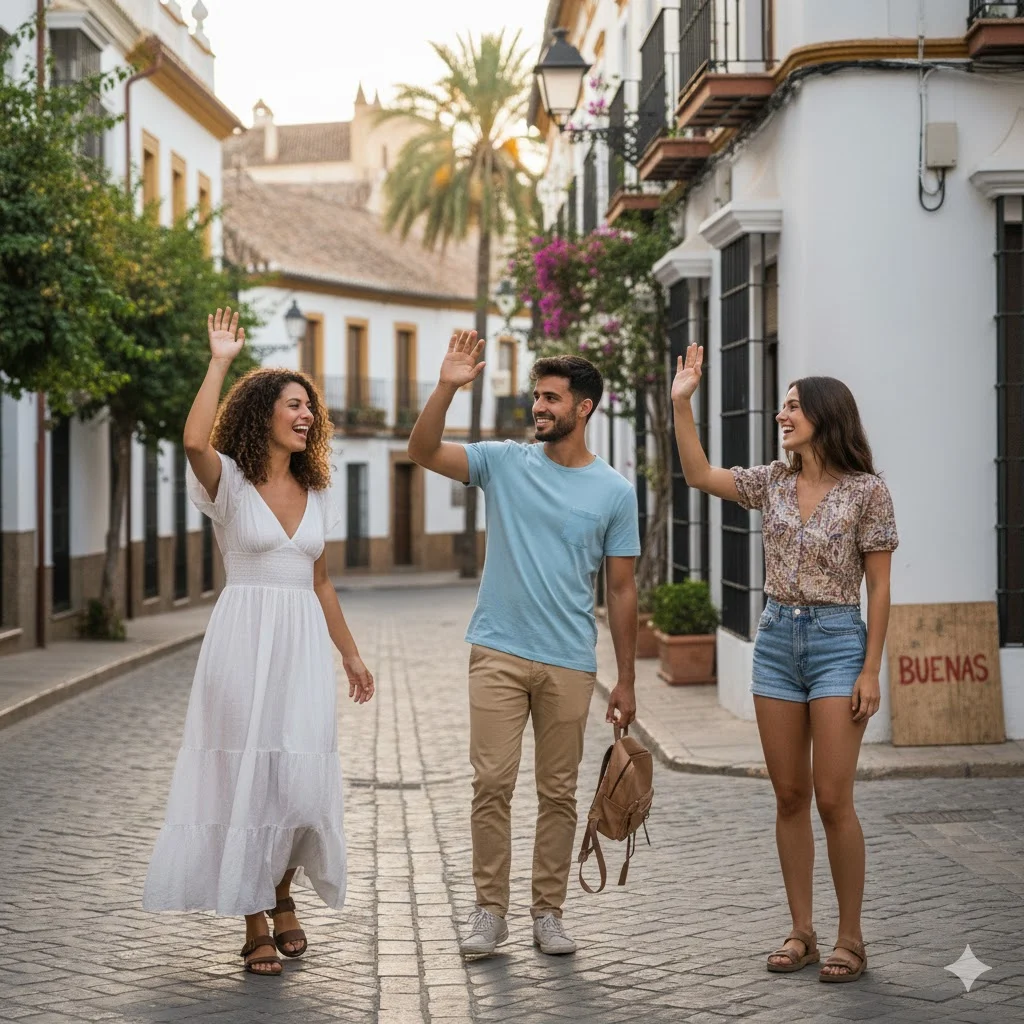
5. Buenas – Casual and Friendly
- Meaning: Short version of time-specific greetings
- Usage: Informal, common in Spain, mainly with friends or colleagues.
- Pronunciation: /ˈbwe.nas/
- Example:
- ¡Buenas! ¿Qué tal tu día? (Hi! How was your day?)
Note: This casual greeting shows friendliness without sounding overly formal.
Regional Variations and Slang
Spanish greetings differ across countries, reflecting local culture and informal speech:
| Country | Greeting | Context |
|---|---|---|
| Mexico | ¡Qué onda! | Informal, among friends |
| Argentina | Che, hola | Friendly, casual |
| Spain | ¡Buenas! | Casual, informal among peers |
| Chile | Hola po | Informal, playful |
| Colombia | Qué más? | Informal, like “What’s up?” |
Pro Tip: Before using slang greetings, observe local usage to avoid awkward moments.

Formal vs Informal Greetings
Formal (usted):
- Buenos días, señor / señora
- Buenas tardes, profesor/a
Informal (tú):
- Hola, ¿qué tal?
- ¡Qué onda! (Mexico)
- Holaaa! (playful, friendly tone)
Why it matters: Choosing the wrong level of formality can be perceived as disrespectful or awkward. When in doubt, start formal and switch to informal if invited.
Fun Ways to Say Hi Online
In texting or social media, Spanish greetings can be playful and expressive:
- Hola! 👋 – friendly and casual
- Hey! Qué tal? – informal, modern
- Holaaa! – playful emphasis, often extended with letters
Tip: Add emojis or punctuation to convey tone, which helps avoid misunderstandings in digital communication.
Pronunciation Tips
- Hola – stress the first syllable: /ˈo.la/
- Buenos días – stress the first syllable of buenos and días: /ˈbwe.nos ˈdi.as/
- Buenas tardes/noches – clear vowel sounds for a, e, and o.
Practice: Repeat greetings aloud, record yourself, or use language apps with voice recognition.
Conversational Examples
- Meeting a colleague:
- Buenos días, señor Martínez. ¿Cómo está usted?
- (Good morning, Mr. Martínez. How are you?)
- Greeting a friend:
- ¡Hola! ¿Qué tal tu fin de semana?
- (Hi! How was your weekend?)
- Texting casually:
- Holaaa 😄 ¿Qué haces hoy?
- (Hi! What are you doing today?)
Cultural Tips for Spanish Greetings
- Gestures: Handshakes, hugs, or cheek kisses (1–2 depending on the country) often accompany greetings.
- Eye contact: Shows respect and attentiveness.
- Time-sensitive greetings: Always use Buenos días, Buenas tardes, or Buenas noches depending on the time of day.
FAQs About Saying Hi in Spanish
1. What is the easiest greeting in Spanish?
- Hola works in almost any context.
2. Are there greetings specific to teenagers?
- Yes, ¡Qué onda! (Mexico) or Holaaa! (playful tone).
3. How do I know if I should use formal or informal?
- Start formal in professional or elder settings; switch if invited to informal speech.
4. Can I greet someone at night with Hola?
- Acceptable in casual contexts, but Buenas noches is more correct.
5. How do greetings differ in Spain vs Latin America?
- Spain favors casual ¡Buenas!; Latin America varies by country with more slang usage.
6. Is it necessary to add gestures?
- In many Spanish-speaking countries, gestures like handshakes or cheek kisses are customary.
7. Can I practice greetings online?
- Yes, through language apps, online tutors, or chatting with native speakers.
8. Can I use emojis in greetings?
- Absolutely! They help convey tone in digital messages.
9. Is pronunciation important?
- Yes, proper stress and vowels make you sound natural and understood.
10. How do I greet someone in a business meeting?
- Use Buenos días or Buenas tardes followed by the person’s title.
Conclusion
Mastering how to say hi in Spanish goes beyond memorizing words. Understanding context, formality, gestures, pronunciation, and regional variations will make your greetings sound authentic and respectful. Start using Hola, Buenos días, or even playful slang, and watch your confidence grow in every Spanish-speaking interaction.